What to wear to a samurai class
Every samurai class in Kyoto we compare dresses you on the spot, so there is no costume to pack. What you choose to wear underneath still matters. The wrong layer makes a kimono bunch and a kendo helmet slip, and the wrong fabric turns a summer afternoon in armor into a long one.
What the classes lend you
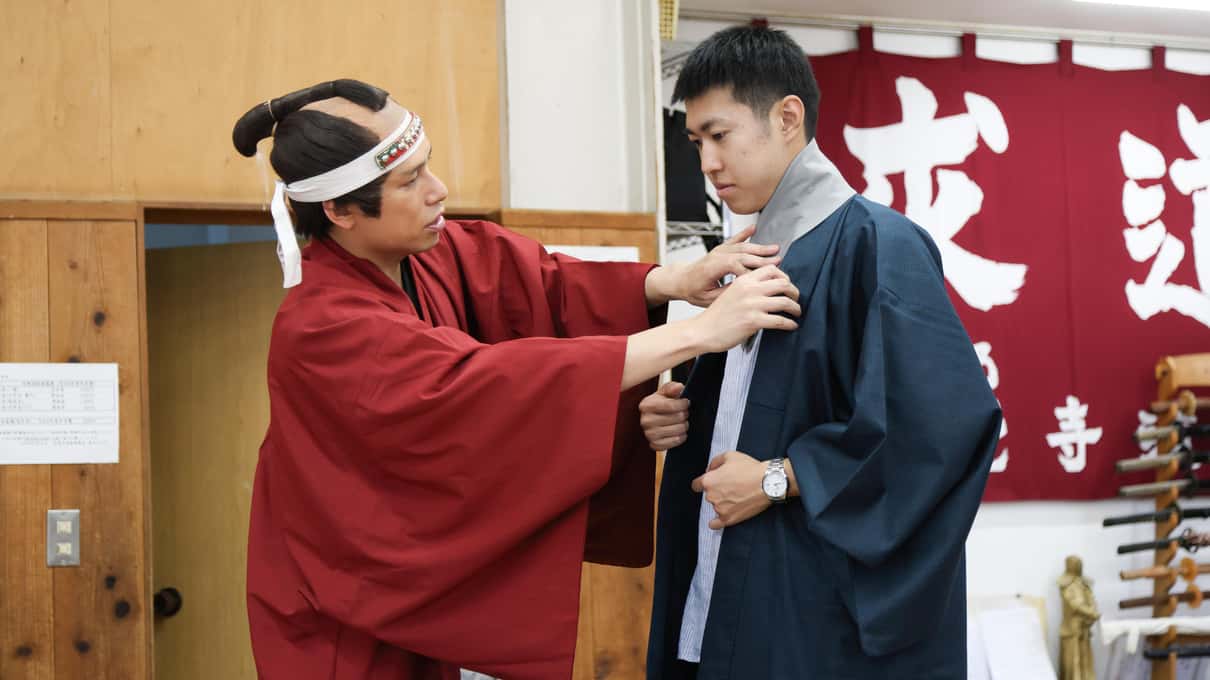
None of the six classes we compare expects you to bring a costume. Each dresses you on site, and the outfit is half the fun of the photos afterward. What differs is how much goes on over your own clothes, and how hot it gets once you start moving.
| Class | From | They lend | You wear |
|---|---|---|---|
| Sword & Zen, samurai house (Waraku) | ~$114 | Samurai attire in the kimono and hakama style | Athletic clothes and comfortable shoes |
| Kendo Experience | ~$101 | Kendo uniform with bogu armor, plus shoes to rent | The lightest T-shirt you own, with shorts or leggings |
| Iai Dojo Yushinkan | ~$129 | A dogi jacket and hakama, tied with an obi | A thin top that fits under a wrap jacket |
| Samurai Kembu Theater class | ~$63 | Kimono and hakama, with tabi socks | Exercise clothes, not a lone hoodie or tights |
| Kyoto Samurai Walk | ~$104 | Full armor and helmet over an under-layer they provide; tabi socks to keep | Clothes that are quick to change out of |
| GOATtrip temple film shoot | ~$125 | Rental kimono and hakama | Comfortable clothes, and bring a camera |
Arrive a little early wherever you go, because changing eats into class time. Waraku asks guests to come before the session to dress, and the gate of its samurai house opens 15 minutes ahead.
The layer under the costume
A kimono and hakama wrap around the body rather than zip, so what you wear beneath them decides how comfortable the next two hours feel. Thin, fitted layers work best. A cotton T-shirt with leggings or cycling shorts sits flat under the folds and lets the hakama tie snugly at the waist. Stiff jeans bunch up at the knee, and a thick sweater turns a kimono into a duvet.
Ginbu, the company behind the Kembu Theater sword class, from ~$63, spells this out. Its GetYourGuide listing warns that a single hoodie or a pair of tights will not do for the costume change, so come in a proper top and bottom you are happy to be seen in. Waraku's listing on Viator asks for athletic clothing, and GOATtrip's temple film shoot, from ~$125, asks for comfortable clothes plus a camera, since you can film the fight scene on your own phone as well.
Kendo is the sweatiest choice of the six. At Kendo Experience, from ~$101, the uniform and the padded bogu trap heat, the helmet most of all. Treat what you wear underneath as gym kit you will want to change out of afterward. A spare top in your bag makes the train ride back from Shugakuin a lot more pleasant.
Bare feet and tabi socks
Shoes come off before you step onto tatami or a dojo floor, usually at the entrance. Slip-on shoes save you from crouching over laces while a queue forms behind you, and they make the return to the street quicker too. Kendo is trained barefoot on a wooden floor. On tatami you go barefoot or wear the split-toe tabi socks a class provides. The Kembu Theater includes tabi with its costume, and Kyoto Samurai Walk hands you a pair to take home with the armor.
Wear socks that come off easily and that you do not mind stuffing into a pocket. Kendo Experience lists shoe rental among its inclusions, and its class has an outdoor part with wooden sticks. If you have a blister, cover it with a bandage that stays put, because polished floors and bare feet are hard on sore skin.
Costume and towel in the price
Ginbu's kenbu class north of Gion dresses you in kimono and hakama with tabi, and you keep the tenugui towel it hands out, from ~$63. Cancel free until 24 hours before, and reserve now to pay later.
Hair and jewelry under a helmet
Tie long hair back before you arrive, in a low knot or a braid rather than a high ponytail. A kendo helmet or an armor kabuto sits right on your head, and a high ponytail pushes it out of line. Under a kimono collar, loose hair also gets caught when the instructor ties you in.
Take off rings and bracelets before you grip a sword, since they slip on the hilt and scratch it. Dangling earrings snag on helmet padding, and a watch gets in the way of the padded gloves that come with full kendo armor. Leave the good jewelry at the hotel.
Go light on makeup. Helmets are padded and worn by guest after guest, and foundation rubs off onto the padding and the collars of rented kimono. Mascara survives a class, but a full face of base rarely does once you start to sweat.
Sweat in summer, cold floors in winter
Kyoto summers are humid, with highs of about 91–95 °F (33–35 °C) in July and August, and that heat follows you indoors. Under kendo armor or a full suit of samurai armor it builds fast. Bring a small towel and a bottle of water. The Kembu Theater class gives each guest a tenugui, the thin Japanese cotton towel, to keep, and Yushinkan hands out bottled water. Our guide to when to book a samurai class marks the hottest weeks.
Winter is the opposite problem. Highs sit around 48–54 °F (9–12 °C), and old wooden buildings hold the cold, so bare feet on the floor feel it first. Arrive in a warm layer you can strip off before the costume goes on, and keep a pair of thick socks in your bag for afterward.
Where your bag goes
Most of these rooms have little space for luggage. Kyoto Samurai Walk has lockers for valuables but no room for large suitcases, and the Kembu Theater says no large luggage at all, with no waiting room either. If you are checking out of a hotel that day, leave the case at the front desk or in a coin locker at Kyoto Station before the class. Carry a small bag for your phone and wallet, and expect to leave it on a shelf while you train. Once you are dressed, dojo etiquette for first-timers covers the bows and the rules around the sword.
When the outfit is the whole point
Some visitors care more about the costume than the sword work. Kyoto Samurai Walk, from ~$104, is all armor and camera, with no sword lesson anywhere in the program. For a studio version, Shogun Studio Japan's armor shoot in Arashiyama, from ~$126, puts your group alone in film-grade armor for an hour of posing under studio lights. Its catch is a thin record, with only 14 reviews from a newer company, and it is a photo session rather than a class. Samurai armor and photo shoots compares the two.
Armor is heavy, which matters with children. Samurai experiences with kids lists the minimum ages class by class, and what a samurai experience costs adds up the bill for a family.