Samurai experiences with kids
Most samurai classes in Kyoto welcome children, but the minimum ages run from 5 to 12 and the classes feel very different to a seven-year-old. A kenbu routine with a fan suits small hands, and kendo sparring thrills teenagers. A silent iaido dojo, by contrast, asks for more patience than most young children have. This guide lists the ages class by class, then turns to observers and the summer heat before ending with who should sit out.
Minimum ages, class by class
Each listing sets its own age rules, and for some classes the two booking sites disagree. Where they do, plan around the stricter one.
| Class | Youngest age | Good to know |
|---|---|---|
| Waraku's samurai house class | 6, and ages 6–12 with an adult (Viator) | About two hours, with a history talk and zazen meditation |
| Kendo Experience | 7 (Viator lists 7–60) | Kendo gear for everyone, optional sparring within the family |
| Iai Dojo Yushinkan | 12 (ages 12–80) | An adult pace and quiet practice; observers pay to watch |
| Samurai Kembu Theater class | 5 on Viator; GetYourGuide says not under 4 | Lessons are with adults, and ages 5–10 ideally have martial-arts experience; no observers |
| Kyoto Samurai Walk | Not under 5 (GetYourGuide); child rate 6–17 (Viator) | No sword training, and the armor is heavy |
| GOATtrip film shoot | 6; youth price for 6–14 on Viator | About an hour, at most 6 guests, often your family alone |
| Samurai & Ninja Museum class | 7 | Big groups, with a museum tour and shuriken throwing |
The classes run in English, though the lead instructor's English can be hard to follow at some venues, and at Waraku's class the sensei teaches through bilingual assistants. Younger children usually do better when a parent repeats the instructions quietly.
Teenagers and kendo
For a family with teenagers, reviewers point again and again to Kendo Experience, from ~$101. Everyone gets a kendo uniform and gear and learns strikes and footwork with bamboo shinai. Light sparring against staff or each other can follow, and that is the part teens talk about afterwards. The instructor takes photos and video, so nobody has to stand out to hold the phone. The catch is the trip to Shugakuin in north-east Kyoto, and some guests never wore the full mask shown in the photos. Kendo, iaido or a sword class explains what the sport involves.
Teens of 12 and over can also join Iai Dojo Yushinkan, from ~$129, which suits a calm, focused teenager better than a restless one. There is no sparring, and the session asks for close attention for most of its 1 h 45 min.
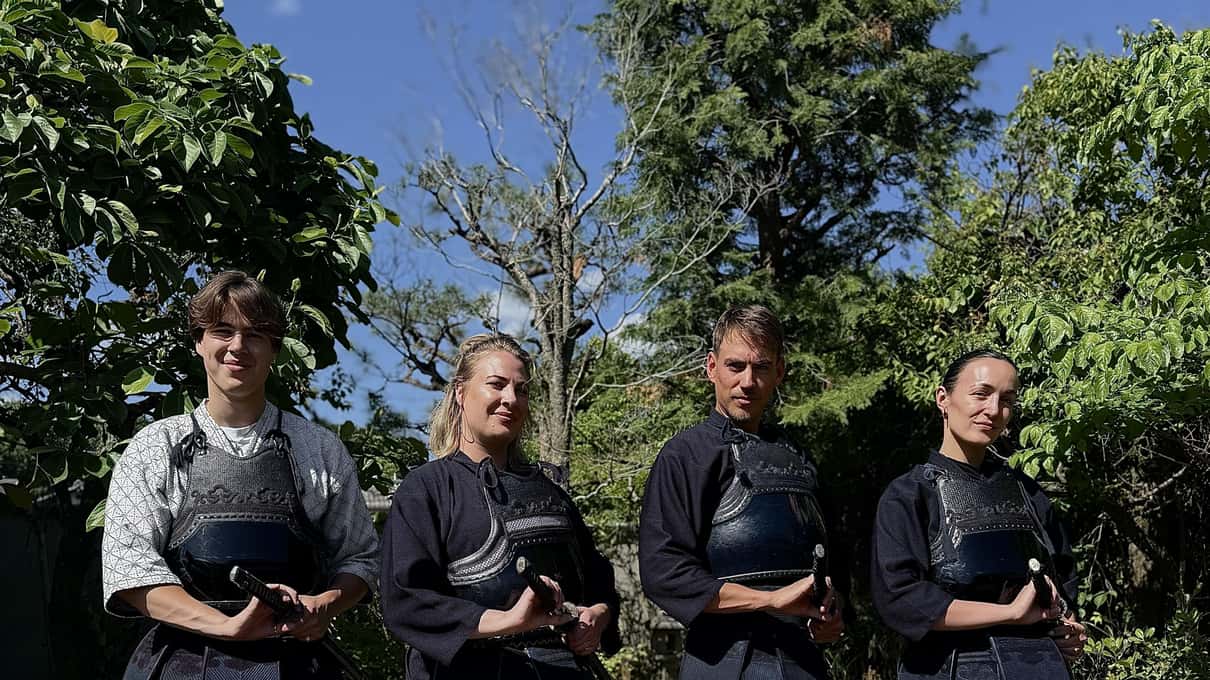
Kendo gear for the whole family
Kendo Experience takes everyone from age 7 and kits the family out in uniform and gear for sparring with each other, from ~$101. Plans can change up to a day before at no cost.
Younger children and short attention spans
For children under ten, length matters as much as content. Pick a class of 60–90 minutes if you can. GOATtrip's film shoot at Myokaku-ji, from ~$125, runs about an hour and often has only your family in it. Children dress in kimono and learn a few cuts from professional sword actors before starring in their own fight scene, which most kids will happily rewatch for weeks. One adult guest felt it was a show for children, which is a fair description from a parent's side. Under-6s cannot take part.
The Kembu Theater sword class, from ~$63, takes the youngest children, from 5, and gives them a costume and a short routine with sword and fan. Lessons are shared with adults, though, so a five-year-old needs to follow along with grown-up strangers for up to two hours. Waraku's samurai house class, from ~$114, starts at 6, but its history talk and the sitting meditation may test a six-year-old more than the sword drills do.
The Samurai & Ninja Museum class, from ~$67, takes children from 7 and mixes a museum tour with shuriken throwing and a short duel with blunt replicas. The catch is size. Sessions run up to 22 people, and reviewers describe only 10–15 minutes of sword practice.
Parents who would rather watch
Not every class has room for a parent on the sidelines. The Kembu Theater allows no observers and has no waiting room, so anyone not taking part needs to spend the session somewhere else. Yushinkan lets observers watch for a fee. For the other classes the listings say little, so ask the operator before you book a place for only some of the family.
If only some of you want to swing a sword, the Kembu Theater's show, from ~$32, lets the whole family watch kenbu for about an hour, with a short turn holding a sword at the end. The catch is one scene. A dramatised ritual suicide upset a young child, according to one reviewer, so be ready to explain it or step out.
Summer heat and heavy armor
July and August bring highs of about 91–95 °F (33–35 °C) and heavy humidity to Kyoto, and kendo gear or a suit of samurai armor makes it feel hotter still. The Kyoto Samurai Walk, from ~$104, warns that its armor is heavy, and its march to the Kamo River happens outdoors. In summer book a morning slot and pack water with a small towel. Ask whether children can take off the helmet between photos. When to book a samurai class covers the seasons, and what to wear to a samurai class lists the layers that work under a costume.
Who should sit out
Most listings rule out guests with back or heart problems, and several exclude pregnancy, which matters for the parents as much as the children. Every listing that mentions access says the class is not wheelchair accessible, and Yushinkan's dojo sits down a spiral staircase. Treat the age limits as firm, and plan something else for a child below the minimum.
Before the day, talk the children through bowing and the rule that hands stay off every sword until the teacher allows it; dojo etiquette for first-timers has the rest. None of the swords these classes give children can cut, as our sword guide explains, and the cost guide totals a class for a family of four.