Real katana, iaito or bamboo?
Few samurai classes in Kyoto put a sharp sword in your hands, whatever the photos suggest. Most hand you a practice sword of bamboo or wood. A few step up to a blunt metal training blade, and one lets you hold an antique katana for a moment. This guide sorts out which sword each class uses and what the listings promise about cutting, then covers buying one to take home.
The sword in each class
The listings describe their swords in very different words, from "imitation katana" to "real iaito". This table translates them.
| Class | What you hold | Cutting |
|---|---|---|
| Waraku's samurai house class | A wooden sword for drills and an antique katana to hold; the cut uses what the listing calls a real iaito | A target cut, per the listing and recent reviewers |
| Kendo Experience | Bamboo shinai and foam swords, plus what the listing calls refined replica blades | A tatami cut in the Viator text; one reviewer says it never happened |
| Iai Dojo Yushinkan | Zinc-alloy training katana, unsharpened | None; the dojo says it does not offer mat cutting at present |
| Samurai Kembu Theater | Imitation katana and a folding fan | None |
| Kyoto Samurai Walk | Props for photos only | None |
| GOATtrip film shoot | Stage swords | None |
| Samurai & Ninja Museum | Blunt replicas | None; the listing cites a rule against sharp blades |
Bamboo and wood
The shinai is the kendo sword, made of bamboo slats bound with leather so it flexes on impact. It is built to hit people safely, which is why Kendo Experience, from ~$101, can let beginners spar in armor with it. The same class also brings out foam swords, and it moves its outdoor wooden-stick segment onto foam when it rains.
The bokken, also called bokuto, is a solid wooden sword shaped like a katana. It carries the weight and balance of a blade without the edge, so schools use it for drills and paired forms. Waraku's class runs its basic drills on a wooden sword before anyone goes near metal.
Iaito and blunt replicas
An iaito is an unsharpened practice sword, usually of a metal alloy, made to look and handle like a katana so you can learn the draw and the return to the scabbard. Iai Dojo Yushinkan, from ~$129, hands out what it calls a zinc-alloy training katana, which is this kind of sword. It has weight and a scabbard, and it cannot cut.
Blunt replicas sit a step below. The museum sword class near Nishiki Market uses them for its short duel, and Kendo Experience's "refined replica blades" belong here too. The Kembu Theater hands out an imitation katana for its routine, with a folding fan in the other hand. GOATtrip's swords are stage props made for filming, and the operator may charge if one gets damaged.
The antique katana at Waraku's class
Waraku's class in the old samurai residence, from ~$114, is the one place on our list where you hold a genuine antique katana. Reviewers put the sword at about 600–650 years old. For many reviewers, holding it is the moment they remember.
The class ends with a cut at a target, using what the listing calls a real iaito, and recent reviewers describe making that cut. An iaito is normally an unsharpened practice sword, and the listing does not explain how this blade is prepared. We read the cut as a short, supervised moment at the end of a class, not as training in test cutting, and the number of cuts seems to be one or two.
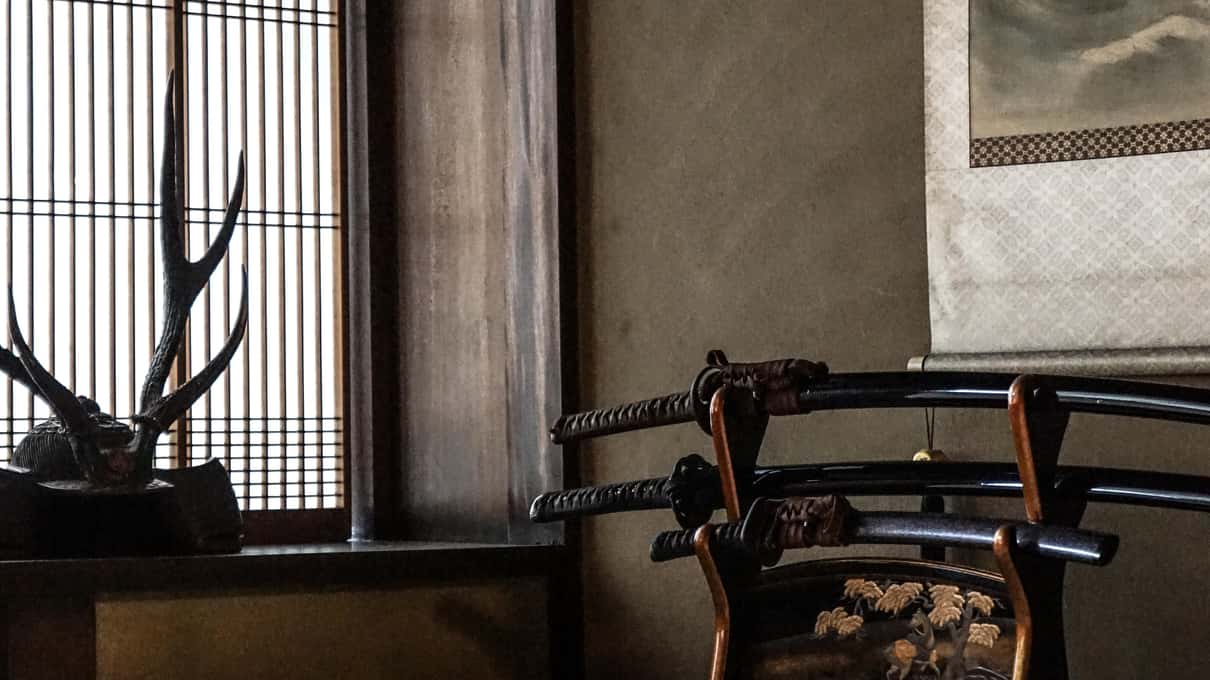
An old blade in your hands
Waraku's class lets you hold an antique katana and closes with a target cut, from ~$114. Viator cancels free until 24 hours before, while GetYourGuide needs seven days.
Live blades and test cutting
A shinken is a live, sharpened sword. Tameshigiri, test cutting, means slicing through rolled tatami mats with one, and it is the photo many visitors hope to take home. The listings in Kyoto do not agree on whether a visitor can do it.
- The museum class says a Japanese rule now stops operators from letting guests use a sharp blade, so it works with blunt replicas
- Yushinkan states that it does not currently offer mat cutting with a live katana
- Kendo Experience promises a tatami cut in its Viator text, and one reviewer says it never happened
- Waraku still lists its target cut, and recent reviewers describe it
We have not seen the rule the museum mentions, and we cannot tell you which reading is right. So treat any promise of cutting a mat with a live blade as unconfirmed, and ask the operator before you book if it is the reason you are going. Whatever sword you are handed, wait for the instructor's word before you draw it or even pick it up. Our guide to dojo manners covers the other rules around blades.
Buying a sword in Kyoto
Replica swords, called mogito, are easy to find. The Kyoto Samurai Walk's shop stocks them beside armor and clothing, and Kendo Experience sells replicas as well. Any sword goes in checked luggage, never in the cabin, and it is wise to ask your airline how it wants a long item packed.
Genuine Japanese swords are a different purchase. In Japan they are registered as art objects, and taking one abroad needs export paperwork as well as approval under your own country's rules. Ask the shop how it handles the papers, and check with your airline and your home customs office before you pay. Carrying swords in public has been banned since 1876, a few years after the Meiji Restoration of 1868, and the rules around them have stayed strict.
To make your own instead, Sword Lab's replica sword workshop, from ~$190, spends about three hours with you casting a zinc-alloy blade and assembling a decorative sword in the colors you choose. The catch is the price, and the packing. You leave with a sword of about 22 in (55 cm) that has to ride in your checked bag, and you learn nothing about using it. What a samurai experience costs sets it against the classes.
Families with younger children can relax about all of this, since the classes that take kids use swords that cannot cut. Samurai experiences with kids has the ages, and kendo, iaido or a sword class explains which discipline goes with which sword.